
Sustainability Statement
As a forward-thinking agribusiness committed to sustainable growth, PLS Plantations Berhad ("PLS") and its subsidiaries ("the Group") remains steadfast in our mission to drive sustainability across every facet of our operations. Building on our progress in sustainability, we continue to prioritise environmental stewardship, social responsibility, and economic resilience as core pillars of our strategy. In the face of escalating climate challenges, we are accelerating our efforts to adopt innovative, sustainable practices—empowering our subsidiaries, partners and communities to contribute to a greener, more equitable future. Together, we are cultivating a legacy of responsible growth that balances planetary health with long-term value creation.
With growing expectations for sustainable palm oil and broader ESG performance from regulators, customers, and stakeholders, our disclosure continues to focus on plantation operations while also highlighting advancements in governance, supply chain engagement and climate resilience.
Scope and Boundary
This Statement covers the Group's entire operations and the entities where the Group holds a controlling interest or management control. The report does not include inactive or dormant subsidiaries. Unless stated otherwise, the performance data presented reflects the Group as a whole.
Reporting Guidelines
Principal Guide:
- Bursa Malaysia Securities Sustainability Reporting Guide, 3rd Edition
- Malaysian Code on Corporate Governance ("MCCG") 2021
- Task Force on Climate-related Financial Disclosures ("TCFD")
References:
- United Nations Sustainable Development Goals ("UN SDGs")
- Global Reporting Initiative ("GRI") Standards 2021
- FTSE4Good ESG Indicators
- Sustainability Accounting Standards Board ("SASB")
- International Financial Reporting Standards ("IFRS")
- International Sustainability Standards Board (ISSB) S1 and S2 ("IFRS S1 & S2")
Statement of Assurance
All data presented in this Statement has been internally sourced, verified, and validated by the respective business divisions, adhering to the GRI principles of accuracy, balance, clarity, comparability, reliability, and timeliness.
The policies and data in this Statement has been reviewed by our internal auditor and approved by the Board of Directors of PLS ("the Board"). We are committed to ensuring the accuracy, relevance, and reliability of our sustainability information and will continuously strive to enhance our data collection and reporting processes. As part of this initiative, we will be engaging an independent external party to provide the necessary assurance in the near future.
Engage With Us
We value your thoughts and concerns and see them as opportunities to enhance our future reporting. Please share your feedback with us at [email protected]
FY2025 Sustainability Highlights and Achievements
- 100% procurement spend on LOCAL VENDORS
- 2.64% increase in volume of PALM OIL PRODUCTION
- RECYCLED 20.31% of WASTE generated
- 100% REPLANT damaged OIL PALM trees
- ZERO incidence of HEALTH & SAFETY NON-COMPLIANCE
- ZERO OPEN BURNING at sites
- 99.8% REDUCTION in GHG emissions
- ZERO fines or non-compliance incidents related to emissions or environmental management
- ZERO HUMAN RIGHTS violation
- ZERO incidence of non-compliance with regards to LABOUR MATTERS
- ZERO incidence of BRIBERY and CORRUPTION
- ZERO incidence of CUSTOMER DATA BREACHES
- ZERO incidence of REGULATORY NON-COMPLIANCE
Our Sustainability Journey
As we advance on our sustainability journey, PLS remains steadfast in our commitment to creating long-term value responsibly.
Our Approach to Sustainability
At PLS, we believe that sustainable success hinges on a harmonious balance between economic prosperity and ESG considerations. We recognise that our long-term viability extends beyond purely financial metrics. By integrating sustainability factors into our core business strategies, we aim to create enduring value for all stakeholders – our shareholders, employees, customers, communities, and the environment.
This approach ensures that we operate responsibly and ethically, while simultaneously contributing to a more sustainable future for all.
Our Guiding Principles

- To be one of the top agro-food players in food security
- To have the largest durian and timber forest species plantation in Malaysia
- To be the largest Malaysia durian brand and manufacturer
- To diversify into other agri & aqua products
- To establish alternative revenue streams for the PLS Group
Alignment with the Sustainable Development Goals (UNSDGs)

Our Sustainability Framework

Our aim is to elevate the palm oil industry by integrating sustainability principles aligned with the MSPO Certification Scheme, MPOCC and Standards Malaysia. The Group is committed to supporting the Malaysian government's SDGs, identifying and addressing material sustainability issues, actively engaging with stakeholders, and implementing a robust sustainability governance system.
Sustainability Governance
PLS Plantations Berhad is dedicated to creating sustainable value for all stakeholders through robust governance aligned with both Malaysian and international ESG frameworks. We actively implement global best practices, while ensuring compliance with Malaysia's National Sustainability Reporting Framework and Bank Negara Malaysia's Climate Change principles. Through continuous stakeholder engagement and proactive policy adoption, we maintain a governance structure that balances operational excellence with long-term environmental and social responsibility, driving sustainable growth across our agribusiness operations.
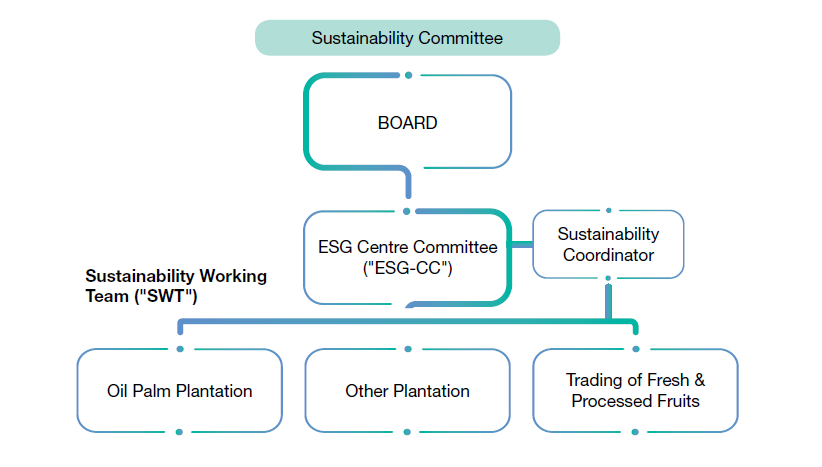
The Board
The Board oversees the Group's sustainability initiatives, ensuring they align with our strategic direction. Working closely with Senior Management, the Board addresses EESG-related obligations and ensures sustainability is integrated into our operations. Through regular reviews, the Board verifies that our strategies adhere to current best practices and identifies opportunities whilst mitigating sustainability risks and challenges.
The ESG Centre Committee ("ESG-CC")
Headed by the Chief Operating Officer ("COO"), the ESG-CC comprises key senior management members. This committee oversees the implementation of sustainability strategies, coordinates with business segments to identify and manage material sustainability issues, and reports directly to the Board on the progress of sustainability initiatives and any regulatory changes affecting the Group.
The Sustainability Working Teams ("SWT")
The SWT, which consist of representatives from each business segment, implement action plans assigned by the ESG-CC. These teams are responsible for executing sustainability initiatives, tracking performance, engaging with stakeholders, and evaluating their department's effectiveness in addressing sustainability issues. The SWT report their findings to the ESG-CC.
Sustainability Coordinator
The Sustainability Coordinator facilitates collaboration between departments and business segments, supports the ESG Committee, and reports to the Sustainability Committee. Additionally, the Coordinator oversees stakeholder engagement and materiality assessments.
Sustainability Policies
Our policies are our commitment to upholding and protecting the rights of all individuals, economic growth, responsible leadership, safeguarding the environment and caring for the community.
For detailed information about our policies, please visit: https://plsplantations.my/corp-governance/
Stakeholder Engagement
As a Group, we prioritise transparent and consistent communication with our stakeholders to ensure their concerns are effectively addressed. Our engagement process is guided by a structured approach that involves identifying and prioritising key stakeholder groups, establishing opportunities for meaningful interaction, clarifying expectations and issues of concern, and fostering collaborative relationships. Through this approach, we aim to build trust, strengthen partnerships and align our efforts towards achieving shared sustainability goals.
| Stakeholder Group | Areas of Concern | Communication Channels & Response |
|---|---|---|
 Investors/Financiers Investors/Financiers |
|
|
 Customers Customers |
|
|
 Employees Employees |
|
|
 Suppliers/Vendors/Contractors Suppliers/Vendors/Contractors |
|
|
 NGOs and Community NGOs and Community |
|
|
 Government Government |
|
|
 Board of Directors Board of Directors |
|
|
Sustainability Material Matters
Over the years, we undertook a comprehensive materiality reassessment to address the evolving landscape of social, environmental, and emerging challenges. This process identified Climate Change, Health and Safety, and Human Rights as the key ESG issues requiring prioritisation within our business activities for sustainable value creation. Guided by these updated materiality findings, we strengthened our sustainability initiatives throughout FY2025, ensuring that our strategies and actions remained aligned with these priorities.
As our business scope has remained consistent during the year under review, these material issues continue to be our primary focus. We remain committed to the continuous refinement of our materiality assessment process and to fostering deeper engagement with our stakeholders to ensure our efforts consistently align with their expectations and the latest global sustainability standards.
Materiality Process

Identify & Categorise
We identified a comprehensive list of stakeholders and material themes that currently affect our stakeholders and business operation. After that, we categorized each material theme under EESG topics and narrowed them down to avoid redundancy.

Stakeholder Inclusiveness
To ensure that stakeholder voices are incorporated, the identified stakeholder groups were engaged to prioritise the themes according to their perceived importance.

Prioritise
All material themes and stakeholder groups were assessed and scored according to their importance and impact.

Validate & Approve
The matrix was reviewed by the Management and subsequently validated and approved by the Board of Directors.
Materiality Matrix
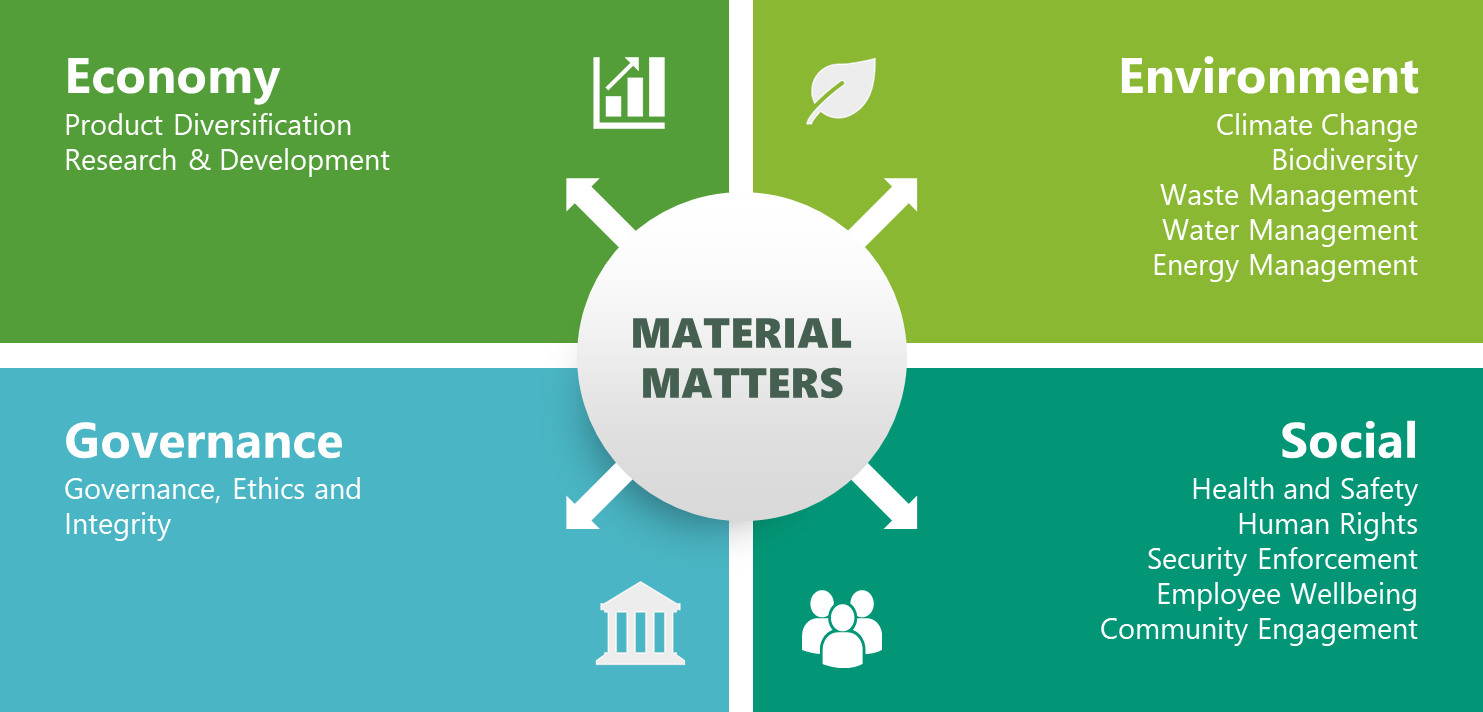
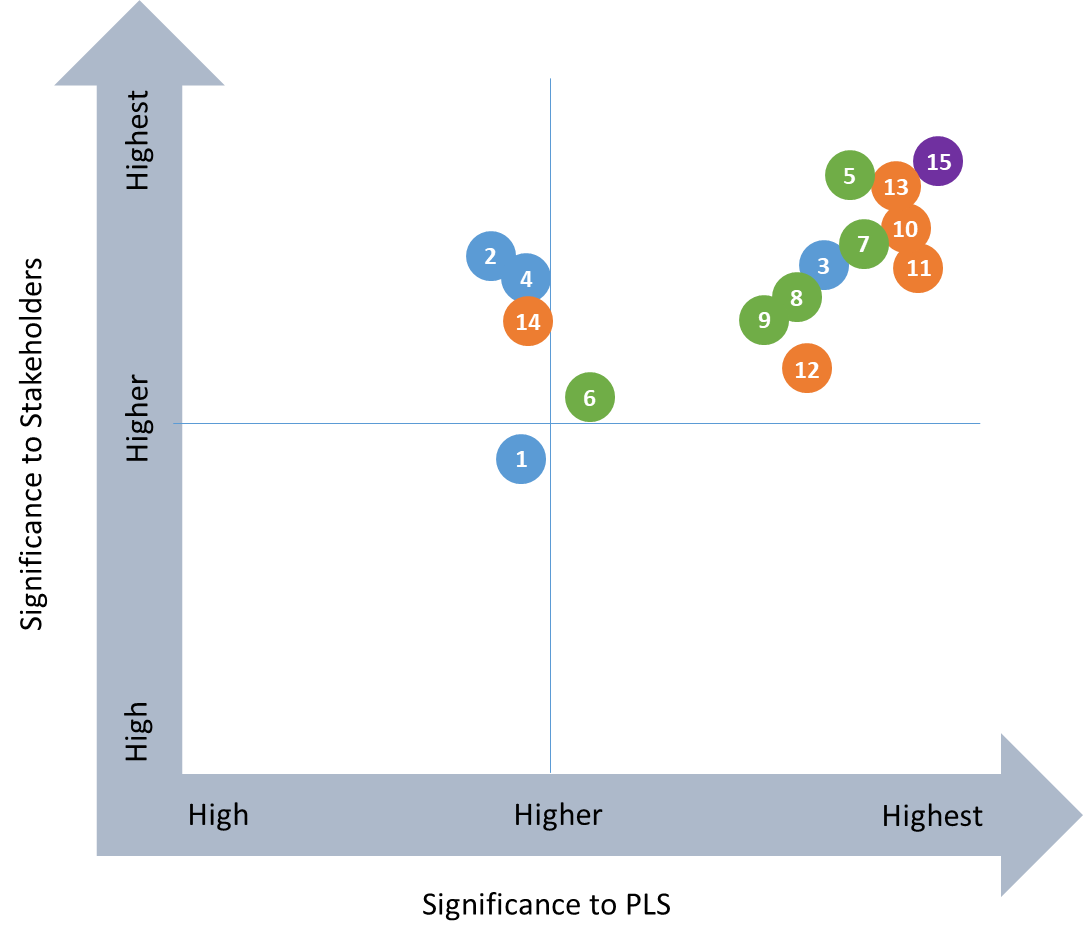
The graphics below depict the material sustainability issues addressed by our Group. The matrix presents the fifteen most significant issues identified for both the Group and our stakeholders. The top four sustainability issues, located in the top right-hand quadrant are Governance, Ethics, and Integrity; Employee Wellbeing; Climate Change; and Health and Safety.
Economic Matters
- MM1: Product Diversification
- MM2: Research and Development
- MM3: Supply Chain and Traceability
- MM4: Local Employment
Environmental Matters
- MM5: Climate Change
- MM6: Biodiversity
- MM7: Waste Management
- MM8: Water Management
- MM9: Energy Management
Social Matters
- MM10: Health & Safety
- MM11: Human Rights
- MM12: Security and Enforcement
- MM13: Employee Wellbeing
- MM14: Community Engagement
Governance Matters
- MM15: Governance, Ethics & Integrity
.svg)
.svg)
.svg)